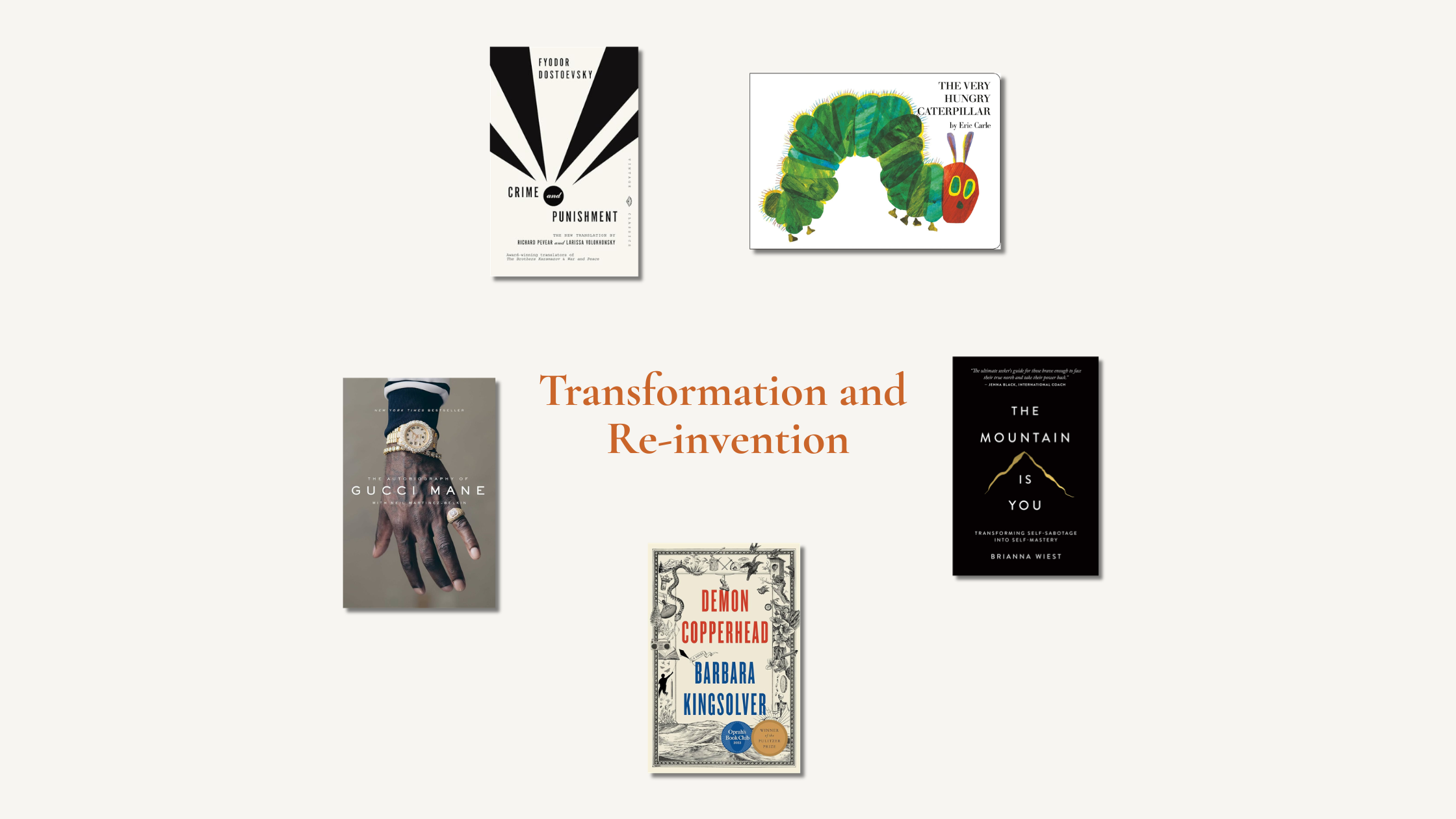
Welcome to the first post in the series, 5 Books, 1 theme! In this series, we will highlight a common theme between different types of books. Before jumping in, I'd love 1 minute of your time to explain on why I started this series.
The Dreyfus Model (1980), describes the research at The University of California, Berkeley on the 5 stages in which skill is acquired (Novice, Competence, Proficiency, Expert, Mastery). People have different ways of learning common themes, through life experiences, through documentation, or through stories. Therefore, I wanted to provide this theme through different types of books. Think of it as an anthology, but with each book giving you the energy to draw conclusions from more abstract writing and less context.
The Very Hungry Caterpillar by Eric Carle
Publish year: 1961
Page count: 26
"Now he wasn’t hungry anymore – and he wasn’t a little caterpillar any more. He was a big, fat caterpillar. He built a small house, called a cocoon, around himself. He stayed inside for more than two weeks. Then he nibbled a hole in the cocoon, pushed his way out…"
To kick things off, this book shows the before and after of a transformation, in the physical sense. It’s a straightforward look at how someone, in this case the very hungry caterpillar, reinvents themselves into someone with more features and complexity. One thing that stands out, even in this children’s book, is that the very hungry caterpillar goes into a cocoon for two weeks. This is part of change that people tend to forget. Sometimes, it’s regression, not just isolation or stalling.
The Mountain is you by Brianna Wiest
Publish year: 2020
Page count: 248
"Your new life is going to cost you your old one. It’s going to cost you your comfort zone and your sense of direction."
Moving more towards the self-help genre, we get a blueprint/framework into how to get over an old version of yourself. It takes an empathetic and emotional approach to identify your triggers and the resulting habits keep you in your comfort zone, and encourages you to shift into a person who supports a future version of who you want to be. This requires you to get rid of your old ways of thinking and doing so that you can finally take the leap toward your aspired self.
Demon Copperhead by Barbara Kingsolver
Publish year: 2024
Page count: 560
"I got up every day thinking the sun was out there shining, and it could just as well shine on me as any other human person."
Growing up, Demon had a troubled childhood with a mother who was a recovering addict and a step-father who became controlling and abusive. Demon would retreat to drawing superheros as his way to feel a sense of control. There were many stories that Demon was told by many others, which affected the way he learned about himself and saw himself. Through many setbacks, such as being raised through foster care, coping with a career-ending injury while being a local football star through a acquired Oxycontin addiction, or death of close loved ones, he eventually achieves sobriety and solace through his art and an autobiography about life in Appalachia.
The Autobiography of Gucci Mane by Gucci Mane and Neil Martinez-Belkin
Publish year: 2017
Page count: 304
"Whenever the music wasn’t going right I would fall back into the streets. Maybe it was a coping mechanism. Going back to something I knew I’d find success in when I wasn’t experiencing it elsewhere."
Personal favorite! I like to recommend this book to people who are currently using some numbing mechanism or coping substance. Doesn’t have to be the hard stuff, could be iced coffees in the morning (I do this), could be Dr. Peppers almost daily (I don’t know why I put ‘almost,’ I drink it all the time). This is a story from someone who had to make it against the odds, while battling his inner demons of substance abuse. Through multiple incarceration periods, he realized that he needed to cut these unhealthy habits, and ended up becoming an actor in an A24 film, and a business owner, finding talent like Migos and Young Thug.
Crime and Punishment by Fyodor Dostoevsky
Publish year: 1993
Page count: 565
"A strange period began for Raskolnikov: it was as though a fog had fallen upon him and wrapped him in a dreary solitude from which there was no escape."
Raskolnikov believes himself to be a superior human being compared to those around him. To merely test this theory, he kills a pawnbroker, believing that he will be able to transcend ethical and societal law. He justifies murdering the pawnbroker because he feels that the pawnbroker is corrupt. However, through the book, two major feelings lead to his own self-surrender: 1) His growing guilt for the murder of the pawnbroker and 2) His increasing love for Sonya, a moral and compassionate girl he longs for. It’s through Raskolnikov's choice to turn himself in because he realizes that the truth will allow him to be free and move forward as a new version of himself.
Reflect, Retreat, Rebirth; a Formula for re-invention
Through all of these books, the common thread is that identity is the choices you make with or against the environment you’re in. You choosing to constantly make those choices can have a substantial effect on your outcomes.
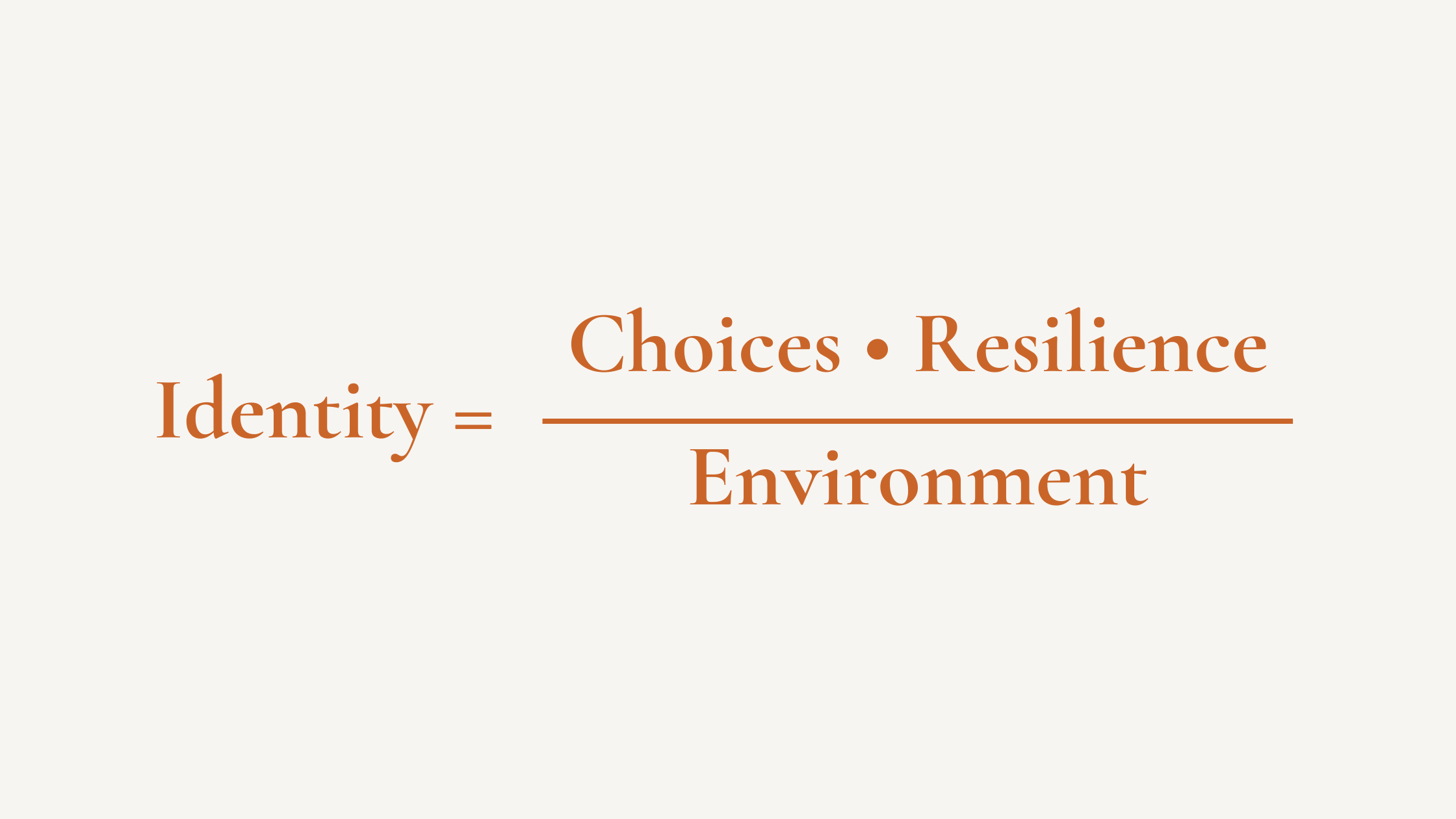
You are either competing against or going with the flow of your environment. However, if you don’t try, you’ll always get 0.
Tell us what's on your mind. We'll do the rest.
Find my book →